

What Is CPFR in Supply Chain Management?
Last Updated: April 9, 2026 | ⏱ 8 min
Supply chain management has always been a balancing act. Too much inventory, and you're burning cash on storage and dealing with obsolescence. Too little, and you're facing stockouts, lost sales, and frustrated customers. For decades, retailers, manufacturers, and suppliers have struggled to synchronize their operations, each working from their own forecasts and making decisions in silos.
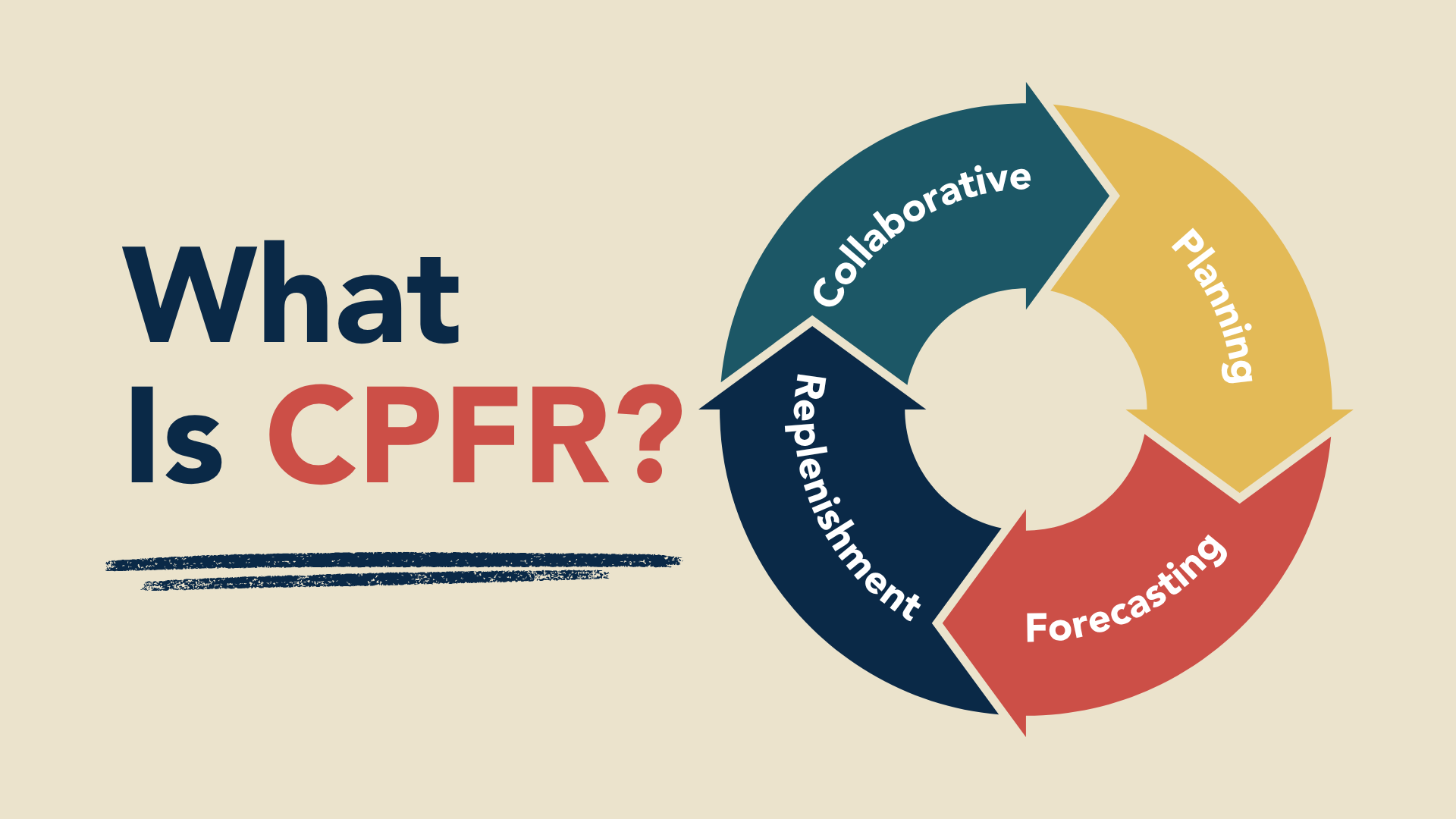
Such a dilemma has introduced CPFR - Planning, Forecasting, and Replenishment. CPFR is a supply chain model that breaks down those silos by bringing trading partners together to jointly plan forecasts and coordinate replenishment activities. Instead of guessing what your retail partner needs or operating blindly without visibility into their sales data, CPFR creates a shared view of demand and a synchronized approach to inventory management.
Understanding what CPFR in supply chain management isn't just about learning another industry acronym. It's about discovering how collaborative planning can reduce costs, improve forecast accuracy, and strengthen partnerships across your entire supply chain network.
What is CPFR? (Definition and Purpose)

CPFR (Collaborative Planning, Forecasting, and Replenishment) is a supply chain collaboration model where retailers, manufacturers, and suppliers jointly plan forecasts and coordinate replenishment activities. Rather than each party working independently from their own data and assumptions, CPFR creates a shared planning process that aligns all trading partners around a single, consensus-driven forecast.
The primary goal of CPFR is to create more accurate demand projections and streamline inventory allocation across the supply chain. When retailers share point-of-sale (POS) data with manufacturers, and manufacturers share production schedules with suppliers, everyone operates from the same information. This transparency eliminates much of the guesswork that traditionally leads to excess inventory, stockouts, and inefficient replenishment cycles.
Originally popularized in the retail sector during the 1990s through pilot programs between major retailers and consumer packaged goods (CPG) manufacturers, CPFR has since expanded into manufacturing, distribution, and various other industries. Today, it's recognized as a best practice for companies seeking to optimize supply chain performance through collaboration rather than competition.
How CPFR Works (General Process)

CPFR operates through four interconnected stages that create a continuous cycle of planning, execution, and improvement:
Strategy and Planning
The foundation of CPFR begins with establishing the scope of collaboration between trading partners. This includes defining roles and responsibilities, setting timelines for forecast updates, and agreeing on performance benchmarks that will measure success.
Critical to this phase is creating formal agreements on how partners will communicate, share data, and resolve exceptions when forecasts diverge or unexpected issues arise. Without clear governance structures, CPFR initiatives often stall when partners disagree on priorities or data interpretation.
Demand and Supply Forecasting
This is where CPFR delivers its most significant value. Trading partners combine their internal forecasts with external sales data, such as point-of-sale information from retail stores, to build a consensus forecast that reflects real market demand rather than isolated assumptions.
These forecasts are updated regularly (weekly, biweekly, or monthly depending on the product category and industry) to stay aligned with market shifts, promotional activities, seasonal trends, and unexpected demand changes. When retailer and supplier forecasts differ significantly, the discrepancy triggers an "exception" that both parties must resolve collaboratively.
Order Planning and Execution
With a consensus forecast in place, trading partners determine what to order, how much, and when. This synchronized approach to replenishment reduces the bullwhip effect—the phenomenon where small demand fluctuations at the retail level create increasingly larger swings in orders as you move upstream in the supply chain.
CPFR promotes coordinated replenishment cycles that minimize stockouts while avoiding the excess inventory that ties up working capital. Automated systems can generate suggested orders based on the agreed forecast, reducing manual workload and improving consistency.
Performance Analysis
The final stage tracks key metrics such as forecast accuracy, order fulfillment rates, inventory turnover, and overall supply chain costs. This data feeds back into future planning rounds, creating a continuous improvement loop.
Performance analysis also helps identify which products, categories, or time periods benefit most from CPFR, allowing companies to focus collaborative efforts where they deliver the highest return on investment.
Benefits of CPFR

When implemented effectively, CPFR delivers tangible benefits across the entire supply chain network:
Improved Forecast Accuracy
By combining retailer sales data with manufacturer production insights, CPFR creates forecasts that better reflect actual demand patterns. Studies have shown that CPFR can improve forecast accuracy by 20-40% compared to traditional independent forecasting methods, reducing both stockouts and excess inventory.
Lower Inventory Levels and Costs
More accurate forecasts mean companies can operate with leaner inventory levels without sacrificing service. Manufacturers carry less safety stock, retailers reduce markdowns on slow-moving products, and distribution centers optimize storage space utilization.
Higher Sales and Service Levels
When the right products are in the right place at the right time, sales increase. CPFR reduces out-of-stock situations that drive customers to competitors while ensuring promotional inventory is positioned correctly to support marketing campaigns.
Reduced Supply Chain Costs
Synchronized planning reduces expedited shipments, emergency orders, and the premium costs associated with last-minute problem-solving. Transportation becomes more predictable, warehousing more efficient, and production schedules more stable.
Stronger Partner Relationships
CPFR transforms trading partner relationships from transactional to strategic. The transparency and communication required for successful collaboration builds trust and create opportunities for joint innovation, category management improvements, and long-term partnerships.
Customer Satisfaction and Competitive Advantage
Ultimately, improved availability, faster replenishment, and better product selection enabled by CPFR enhance the end customer experience. This translates into loyalty, repeat purchases, and a competitive edge in markets where supply chain efficiency differentiates winners from losers.
How Coast to Coast Fulfillment Employs CPFR
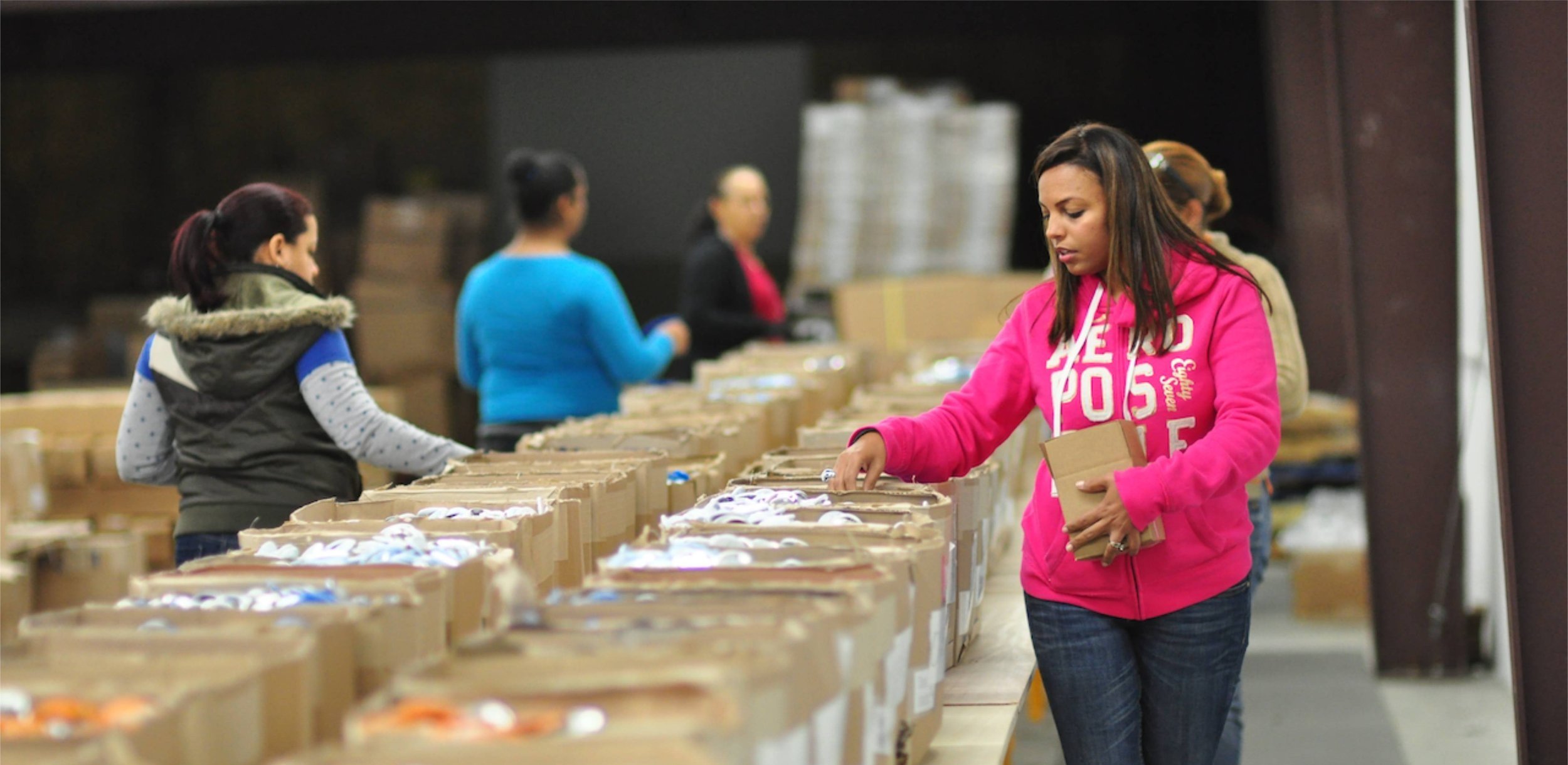
At Coast to Coast Fulfillment, we leverage CPFR principles through our Data Depot platform to help brands optimize inventory management and replenishment cycles. Data Depot provides real-time visibility into inventory levels, sales velocity, and fulfillment patterns, enabling collaborative forecasting between CTCF and our clients.
Through Data Depot, clients can monitor current stock levels, track historical sales trends, forecast future demand, and coordinate replenishment shipments to prevent both stockouts and excess inventory. This collaborative approach ensures inventory is positioned correctly to support sales across all channels, whether eCommerce, or retail—without tying up unnecessary capital in safety stock.
For brands selling through major retailers, CTCF's EDI integration capabilities support the data exchange required for effective CPFR implementation. We receive and process EDI 850 (Purchase Orders), transmit EDI 856 (Advance Ship Notices), and provide inventory visibility that enables coordinated planning with retail partners.
Coast to Coast Fulfillment is a U.S.-based 3PL specializing in jewelry fulfillment, wholesale fulfillment, and eCommerce warehousing with advanced inventory management tools. By combining collaborative planning with operational excellence, we help brands achieve inventory optimization and forecast accuracy that CPFR promises.
CPFR Compared to VMI and S&OP
CPFR is often confused with related supply chain methodologies, but understanding the differences helps clarify when each approach is most appropriate:
CPFR vs. Vendor Managed Inventory (VMI)
Vendor Managed Inventory (VMI) gives the supplier control over replenishing the buyer's inventory. The buyer shares sales and inventory data, but the supplier makes all decisions about when and how much to ship. This works well when suppliers have superior forecasting capabilities or when buyers want to minimize their own planning workload.
CPFR, by contrast, requires shared planning responsibilities and collaborative execution. Both parties contribute to forecasts, review exceptions together, and jointly decide on replenishment strategies. This collaborative approach typically yields better results than VMI when buyer and supplier both have valuable insights about demand drivers, market conditions, or operational constraints.
When to use VMI: Simple product categories, high supplier expertise, buyer wants to outsource inventory management completely.
When to use CPFR: Complex demand patterns, both parties have critical market insights, strategic partnerships where joint planning delivers superior results.
CPFR vs. Sales and Operations Planning (S&OP)
Sales and Operations Planning (S&OP) is an internal alignment tool within an organization that integrates sales forecasts, financial planning, and supply chain operations. S&OP meetings bring together cross-functional teams (sales, marketing, finance, operations) to create a unified plan that balances demand and supply.
CPFR extends beyond internal teams to involve external trading partners. While S&OP aligns your own organization, CPFR aligns your organization with your suppliers and customers. Many companies use both: S&OP for internal coordination and CPFR for external collaboration with key trading partners.
When to use S&OP: Internal misalignment between departments, need for cross-functional planning within your organization.
When to use CPFR: External supply chain relationships are critical, trading partners hold information essential for accurate forecasting, inventory is shared across organizational boundaries.
The Bottom Line on CPFR

When retailers, manufacturers, and suppliers align their forecasts and coordinate replenishment activities, everyone benefits through improved accuracy, lower costs, and better service levels.
CPFR isn't right for every relationship or product category. It requires commitment, transparency, and technology infrastructure to support data exchange and collaborative planning. But for strategic partnerships where accurate forecasting and synchronized operations drive competitive advantage, CPFR represents a proven framework for supply chain excellence.
Ready to optimize your inventory management and implement collaborative planning principles? Coast to Coast Fulfillment offers the technology, expertise, and partnership approach to help your brand achieve supply chain efficiency. Our Data Depot platform, EDI capabilities, and collaborative planning support enable the forecast accuracy and replenishment coordination that drive profitable growth.
Contact Coast to Coast Fulfillment today to learn how our 3PL services can strengthen your supply chain partnerships and improve inventory performance.
CPFR FAQ
-
CPFR (Collaborative Planning, Forecasting, and Replenishment) is a supply chain model where retailers, manufacturers, and suppliers jointly plan forecasts and coordinate replenishment activities. Instead of each party working independently, CPFR creates shared planning processes that align all trading partners around a consensus-driven forecast, improving accuracy and reducing inventory costs.
-
CPFR works through four stages: (1) Strategy and Planning establishes collaboration scope and governance, (2) Demand and Supply Forecasting combines internal and external data to build consensus forecasts, (3) Order Planning and Execution determines what to order and when based on shared forecasts, and (4) Performance Analysis tracks metrics to drive continuous improvement. This cycle repeats regularly to maintain alignment.
-
Key benefits include improved forecast accuracy (20-40% improvement in some cases), lower inventory levels and costs, higher sales through reduced stockouts, reduced supply chain costs from synchronized planning, stronger trading partner relationships, and enhanced customer satisfaction. CPFR transforms reactive supply chains into proactive, collaborative networks.
-
VMI (Vendor Managed Inventory) gives suppliers control over replenishing buyer inventory, with the buyer sharing data but not participating in planning decisions. CPFR requires joint planning where both parties contribute to forecasts and collaborate on replenishment strategies. CPFR is more collaborative while VMI is more supplier-controlled.
-
S&OP (Sales and Operations Planning) is an internal process within a single organization that aligns sales, finance, and supply chain teams. CPFR extends beyond internal teams to involve external trading partners like suppliers and retailers. Many companies use both: S&OP for internal coordination and CPFR for external supply chain collaboration.
-
CPFR originated in retail and consumer packaged goods (CPG) but is now used across manufacturing, distribution, apparel, food and beverage, electronics, and any industry where accurate demand forecasting and coordinated replenishment deliver competitive advantage. It's most valuable in industries with complex supply chains and strategic trading partner relationships.