

Dimensional Weight Calculator
Calculate dimensional weight for shipping carriers
Dimensional Weights



What is Dimensional Weight (DIM)?
Dimensional weight (also called DIM weight) is a pricing method carriers use to account for the amount of space a package takes up relative to its actual weight. Instead of charging purely by pounds, carriers like USPS, UPS, and FedEx calculate dimensional weight to ensure lightweight but bulky shipments are priced fairly based on the space they occupy in delivery trucks and aircraft.
How is Dimensional Weight Calculated?
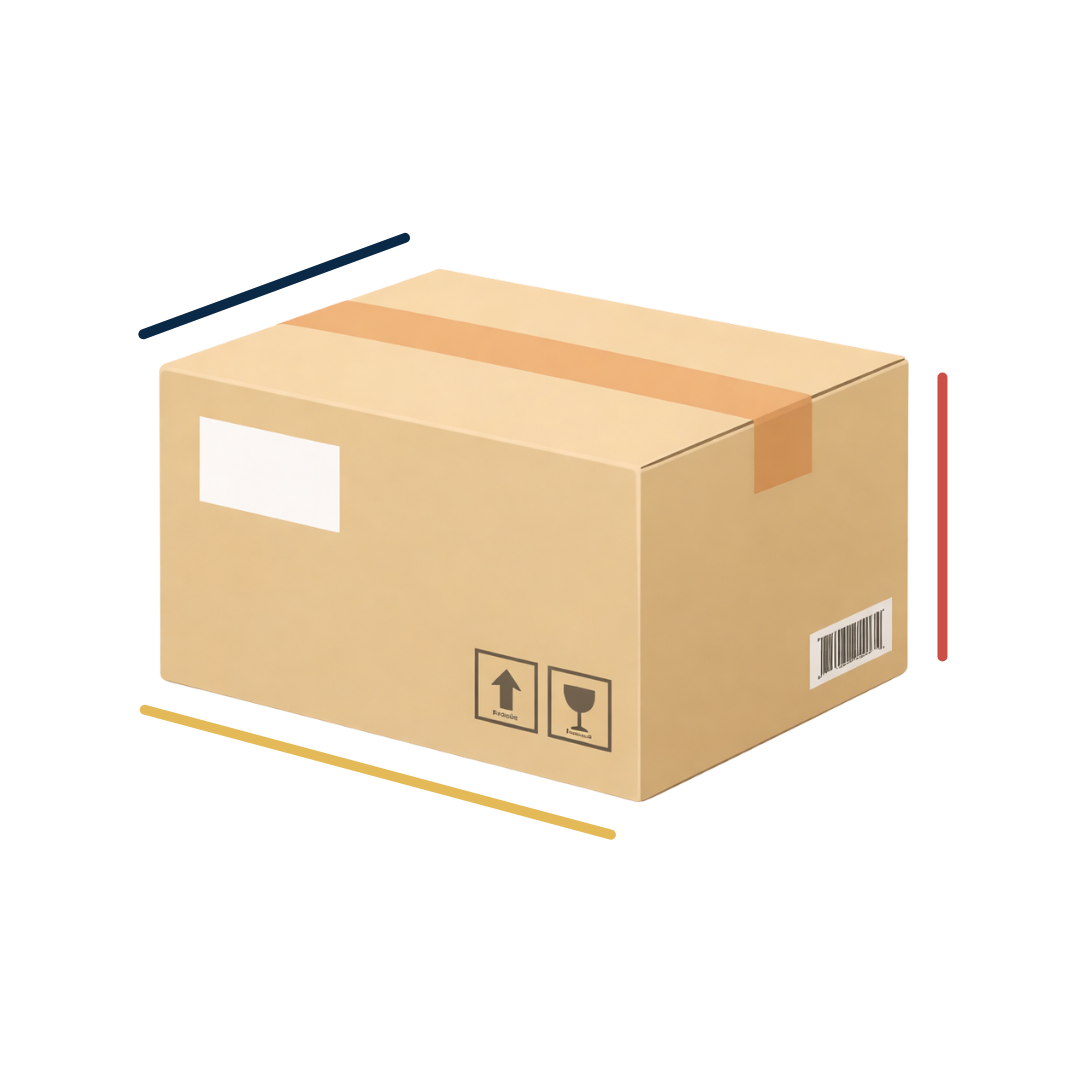
Dimensional weight calculation follows a straightforward formula used by all major carriers. To calculate dimensional weight, multiply a package's length × width × height (in inches), then divide by a carrier-specific dimensional divisor (also called a DIM factor).
-
To calculate dimensional weight for FedEx, divide the cubic inches by the FedEx DIM divisor (commonly 139 for domestic shipments).
-
To calculate dimensional weight for UPS, follow the same steps as FedEx. Divide the cubic inches by the UPS DIM divisor (commonly 139).
-
For USPS, dimensional weight typically applies to larger packages and uses a different divisor (often 166 for certain zones), depending on the service and destination.
What is the difference between dimensional weight and actual weight?
Actual weight is the physical weight of your package measured on a scale, while dimensional weight reflects the volume or space the package occupies. Carriers charge based on whichever weight is greater—actual weight or dimensional weight—to ensure fair pricing for both heavy, compact shipments and lightweight, bulky ones.
Example: A 5-pound pillow in a large box may have a dimensional weight of 18 pounds due to its size. The carrier would charge for 18 pounds, not the actual 5-pound weight.
This pricing model ensures carriers are compensated fairly for the space each package consumes, regardless of its physical weight. For businesses shipping lightweight products in oversized packaging, dimensional weight can significantly increase shipping costs if not optimized.
Contact Us Today
Interested in streamlining your fulfillment operation with a 3PL?
Talk with a fulfillment expert to learn how outsourcing shipping and logistics could save time, reduce costs, and support your growth.
