

What Are Chargebacks in Retail & How to Avoid Them

Last Updated: June 8, 2026 | ⏱ 8 min
You landed your first purchase order from a major retailer. It feels like the breakthrough you've been working toward. Then, a few weeks after your first shipment, something unexpected shows up: a deduction on your invoice. No phone call. No warning. Just money missing and a reason code you've never seen before.
Welcome to the world of retail chargebacks.
For brands entering wholesale and retail distribution for the first time, chargebacks are one of the most common and costly surprises. They're automatic, they add up fast, and many of them are entirely preventable. But before you can prevent them, you need to understand what they are, why retailers issue them, and what you can do when one lands in your lap.
This guide breaks it all down.
What Are Retail Chargebacks?

A retail chargeback is a financial penalty that a retailer deducts directly from a vendor's invoice when the vendor fails to meet the retailer's compliance requirements.
Think of it less like a fine and more like a correction. Retailers run massive distribution centers processing thousands of shipments every day. When a vendor's shipment doesn't meet their standards (wrong label, late delivery, missing documentation) it disrupts their operation. Chargebacks are how retailers offset that cost and hold vendors accountable.
Here's what makes chargebacks especially frustrating for new brands: they're often issued automatically. There's no negotiation upfront. The deduction just appears, and it's your job to track it down, understand why it happened, and decide whether to dispute it or correct the process.
Common chargeback amounts range from a flat fee (often $25–$250 per incident) to a percentage of the invoice, which can quickly become significant when you're dealing with large order volumes.
Why Retailers Issue Chargebacks

Retailers like Walmart, Target, and Nordstrom aren't issuing chargebacks to be difficult. They're doing it because their distribution centers operate efficiently and even a small disruption throws off the entire system.
Here's the reality of retail distribution:
A single retailer may receive thousands of shipments per day across hundreds of vendors
Each DC (distribution center) is designed around predictable, standardized inputs
When a shipment arrives with the wrong label, an incorrect pallet configuration, or missing ASN data, it requires manual intervention, labor that costs the retailer time and money
Chargebacks offset the operational cost of those disruptions
Retailers also rely on compliance to maintain inventory accuracy, reduce receiving time, and keep store shelves stocked on schedule. Non-compliant shipments don't just slow down the DC, they can delay replenishment to retail stores, which affects sales at the shelf level.
In short: when your shipment doesn't follow their rules, it costs them. Chargebacks are how they recover that cost.
Common Causes of Retail Chargebacks
There are dozens of possible chargeback violations across different retailers, but most fall into a handful of categories. Here's what to watch for.
Labeling Errors
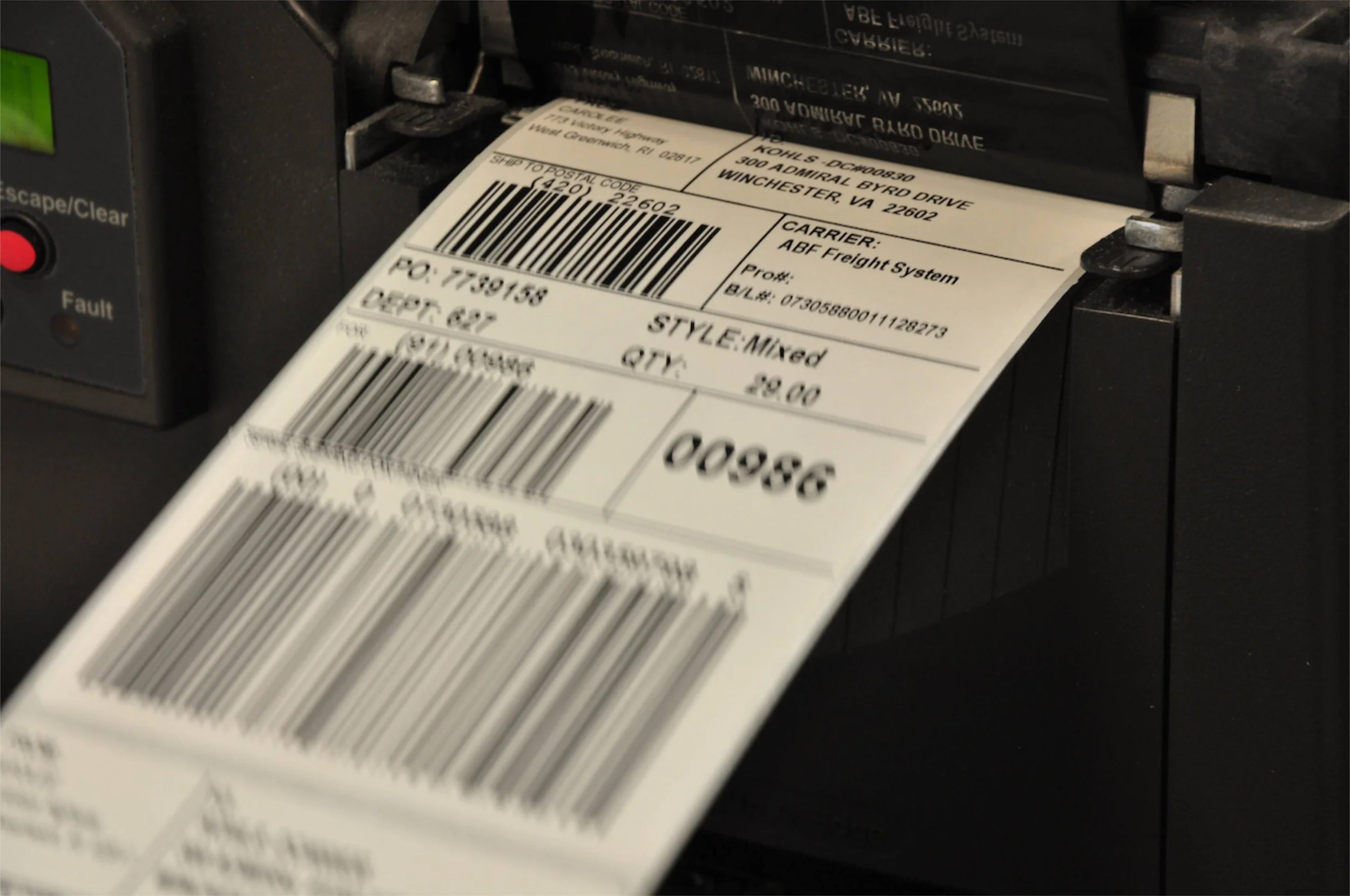
Labels are the first thing a retailer's receiving team checks. If something is off, the shipment can be rejected or flagged before it even hits the dock.
Common labeling violations include:
Missing carton labels — each carton typically requires a GS1-128 label
Incorrect barcode placement — labels must appear in the correct location on the carton
Wrong GS1 label format — each retailer may have unique data requirements within the label itself
Labeling errors are among the most frequent and costly chargeback causes in retail compliance. They're also among the most preventable with the right processes in place.
ASN (Advanced Shipment Notice) Errors

An ASN is an electronic notification sent to the retailer before your shipment arrives. It tells them what's coming, when it's arriving, and how it's packed. Retailers use this data to pre-assign dock doors, schedule labor, and pre-receive inventory in their systems.
When your ASN is wrong (or late) it throws off everything downstream.
ASN-related violations include:
Late ASN submission — most retailers require the ASN to be sent within a specific window before delivery
Quantity mismatches — the ASN must exactly match what you're shipping
Incorrect carton structure — the ASN must reflect how cartons are packed, including SKU-level detail
Routing Guide Violations

Every retailer publishes a routing guide — a document that specifies exactly how vendors must ship to their DCs. This includes approved carriers, freight terms, delivery appointment requirements, and more.
Violations in this category include:
Shipping without retailer approval — some retailers require freight authorization before your shipment leaves the warehouse
Using an unapproved carrier — routing guides often name specific carriers or carrier types
Missing required delivery windows — appointment-based receiving means late trucks may be turned away or charged
Packaging and Pallet Errors

How your product is packed and palletized matters just as much as what's inside the box.
Common violations here include:
Incorrect pallet configuration — height limits, weight limits, and pallet type are often specified
Improper carton sizes — some retailers require specific carton dimensions
Mixed SKUs when not allowed — many retailers require single-SKU cartons for easier receiving and ticketing
Delivery Timing Issues
Retailers schedule labor around expected deliveries. When shipments arrive late (or miss their appointment window entirely) it disrupts receiving operations and can result in a chargeback.
Even small delays matter. In retail, a missed delivery window isn't just a logistical inconvenience but a missed replenishment cycle for the stores waiting for your product.
What to Do If You Receive a Chargeback
First: don't panic, and don't ignore it. Many chargebacks are disputable but only if you act quickly and have the right documentation.
Here's the process to follow:
1. Review the chargeback reason code. Retailers provide a reason code with every chargeback. This tells you why the deduction was issued. Learn the code and look up what it means in the retailer's vendor compliance manual.
2. Pull your shipment documentation. Gather your BOL (bill of lading), ASN confirmation, shipping labels, packing slips, and any routing guide approvals. This is your evidence.
3. Determine if the dispute is valid. Compare the chargeback claim against your documentation. Did the error actually occur? Or does your paperwork show compliance? Sometimes chargebacks are issued in error, especially for ASN timing discrepancies.
4. Submit your dispute within the allowed timeframe. Most retailers have strict dispute windows (often 30 to 60 days). Miss that window, and you've forfeited your right to contest the deduction. Submit your dispute through the retailer's vendor portal with all supporting documentation attached.
5. Correct the root cause. Whether you win the dispute or not, use the chargeback as a diagnostic tool. Identify where the process broke down and fix it before the next shipment.
How to Avoid Retail Chargebacks
The best chargeback is the one that never gets issued. Here's how to build compliance into your operation from the start.

Read the Routing Guide (Before You Ship)
Every retailer is different. Target's requirements are not the same as Walmart's, and Nordstrom's are different from both. Before your first shipment to any new retail partner, read their routing guide cover to cover.
Pay close attention to:
Approved carriers and freight terms
Delivery appointment scheduling procedures
Labeling requirements and label placement diagrams
ASN submission windows and required data fields
Validate Labels Before Every Shipment
Don't assume labels are correct. Confirm barcode placement, check that GS1 label data matches the PO, and scan every label before it goes on a carton. A two-minute check can prevent a costly deduction.
Send Accurate ASNs
Your ASN is your shipment's handshake with the retailer's system. It needs to be accurate and on time, without exception. Set internal deadlines for ASN submission that leave a buffer before the retailer's required window. And always reconcile the ASN against the actual shipped quantities before transmitting.
Perform a Pre-Shipment Audit
Before a shipment leaves your warehouse, run a final check:
Are all carton counts correct?
Are pallets built to spec?
Are labels in the right location on every carton?
Has the routing guide been followed for carrier and freight terms?
This extra step takes time, but it takes far less time than disputing a chargeback after the fact.
Work With Partners Who Know Retail Compliance
Routing guide compliance is a specialized skill. If you're managing it in-house without experience, the learning curve is expensive. Working with a 3PL like Coast to Coast Fulfillment that has retail compliance expertise with EDI capabilities can dramatically reduce your chargeback exposure from day one.
Chargebacks for Returns

Chargebacks don't only apply to outbound shipments. Return shipments can trigger them too, and this is an area that often catches brands off guard.
What Are Return Chargebacks?
A return chargeback is a penalty issued by a retailer when a vendor fails to follow the correct process for receiving or processing a return. Just as outbound shipments must meet specific compliance standards, returns must be handled according to the retailer's procedures.
Common Return-Related Chargeback Causes
Unauthorized returns — processing a return without a valid return authorization (RA)
Incorrect return labeling — return shipments require specific labels, just like outbound ones
Missing documentation — return shipments must include the required paperwork
Incorrect carton contents — returning items that don't match the return authorization
Late return processing — many retailers require returns to be processed within a set timeframe
Why Return Compliance Matters
Retailers track return accuracy closely. High error rates in return processing increase their operational costs which then get passed back to vendors through chargebacks. A strong return process isn't just good logistics; it's a form of vendor relationship management.
To stay compliant on returns:
Use standardized return procedures for each retail partner
Always confirm the retailer's return instructions before processing
Validate all documentation before shipping any return
How a 3PL Helps Reduce Retail Chargebacks
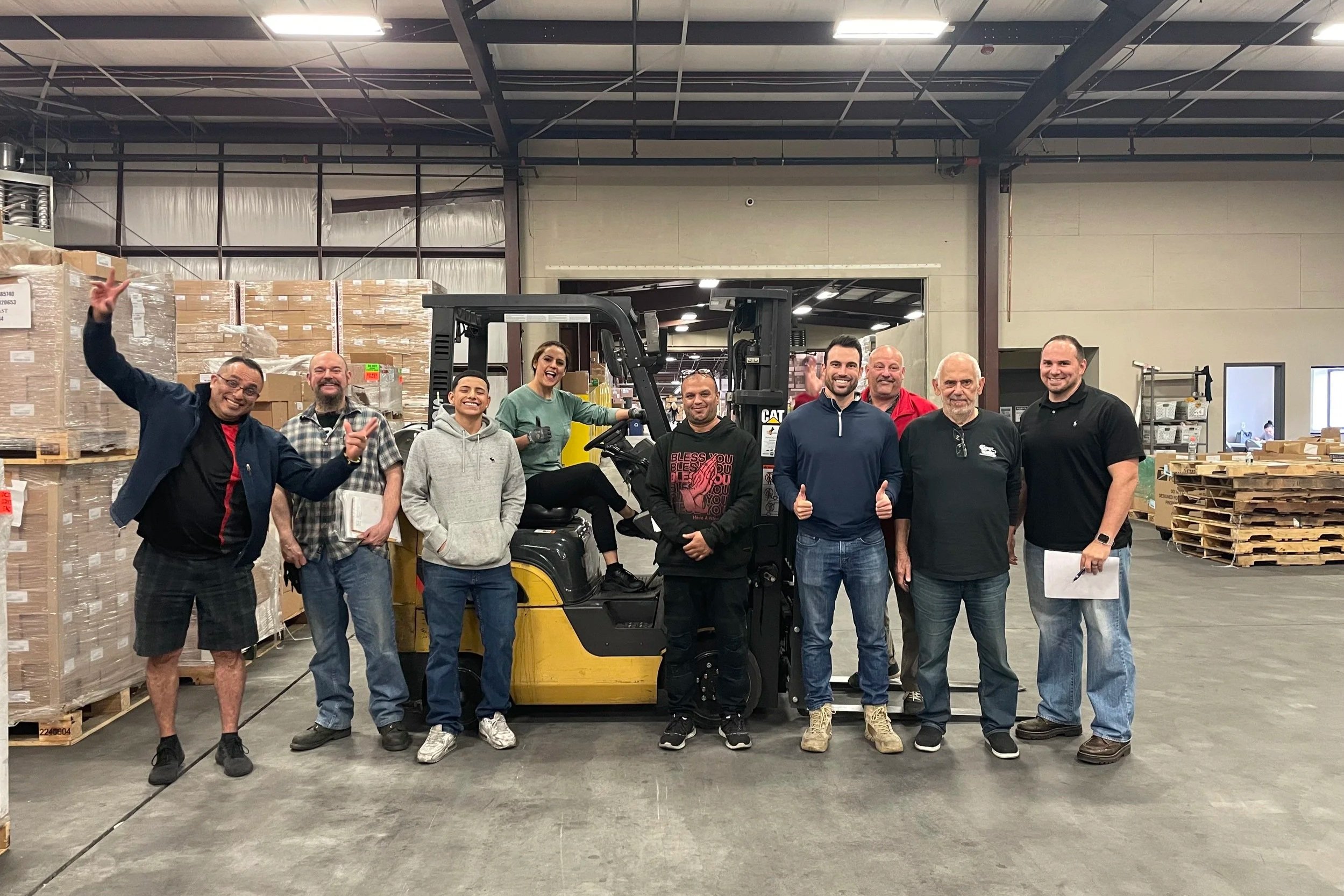
Managing retail compliance in-house is possible, but it requires expertise, consistent processes, and constant attention to detail. An experienced 3PL fulfillment partner like Coast to Coast Fulfillment can serve as your first line of defense against chargebacks.
Here's how a Coast to Coast Fulfillment supports retail compliance:
Label Validation — Labels are validated before they're applied, checking for correct format, placement, and GS1 data.
ASN Generation — CTCF manages EDI and ASN transmission on your behalf, ensuring notices are sent accurately and within the retailer's required window.
Routing Guide Compliance — We maintain routing guide documentation for each of your retail partners and builds those requirements directly into the fulfillment workflow.
Shipment Accuracy Checks — Our client’s take advantage of pre-shipment audits (carton counts, pallet builds, label checks)
Return Processing Management — We can even handle your entire reverse logistics operation, including return labeling, documentation management, and timely processing, keeping you in compliance with retailer return requirements.
At Coast to Coast Fulfillment, we support brands selling through major retail partners including Walmart, Target, Nordstrom, Macy's, Sephora, and more. Our EDI team manages full document support (PO receipt, ASN generation, invoicing, and compliance monitoring) so your shipments meet retailer standards every time.
With 99.5% order accuracy and deep retail compliance expertise, we help brands protect their margins and build strong, lasting relationships with retail partners.
Ready to reduce chargebacks and protect your retail margins?
Retail Chargeback FAQ
-
In the supply chain context, a chargeback is a financial penalty issued by a retailer or trading partner when a vendor fails to meet compliance requirements. This can include labeling errors, ASN violations, routing guide non-compliance, or delivery timing issues. Chargebacks are deducted directly from the vendor's invoice.
-
The most frequent causes of retail chargebacks are labeling errors (missing or incorrect GS1 carton labels), ASN errors (late or inaccurate shipment notices), routing guide violations (using the wrong carrier or missing delivery appointments), and packaging non-compliance (incorrect pallet configuration or mixed SKUs).
-
A common example: a vendor ships 500 units to a Target DC, but the ASN was submitted four hours after the retailer's required window. Target's system flags the late submission and automatically deducts a flat-fee penalty from the vendor's invoice. The vendor receives a deduction notification with the corresponding reason code.
-
Yes. Most retailers have a formal dispute process through their vendor portal. To dispute successfully, you'll need documentation proving compliance — including the BOL, ASN confirmation, and shipping labels. Disputes must be submitted within the retailer's specified timeframe, typically 30–60 days.
-
A 3PL with retail compliance experience manages the key touchpoints where chargebacks most commonly occur: label validation, ASN generation, routing guide adherence, and shipment accuracy. By building compliance checks into the fulfillment workflow, an experienced 3PL can significantly reduce your chargeback exposure.