

Fulfillment Center vs. Warehouse: What’s the Difference?

Last Updated: July 7, 2026 | ⏱ 8 min
You landed your first big order. Inventory is piling up, sales channels are multiplying, and a quick Google search sends you down a rabbit hole of logistics jargon. Fulfillment center. Warehouse. Third-party logistics. They all start to blur together.
Here’s the thing: the fulfillment center vs warehouse distinction isn’t just about definition. For a growing brand, choosing the wrong one shows up on your shipping invoice, in your delivery times, and eventually, in your customer reviews.
So let’s clear it up. This guide breaks down what a warehouse and fulfillment center actually are, how they operate differently, and why the location of your fulfillment center matters just as much as the services inside it.
Key Takeaways
- A warehouse is built for bulk, long-term storage. A fulfillment center is built to process and ship individual customer orders fast.
- Warehouses typically offer storage only. Fulfillment centers offer pick, pack, ship, returns, and platform integrations.
- Distribution centers sit between manufacturers and retailers, which makes them different from both.
- For D2C eCommerce brands, a fulfillment center is almost always the right choice.
What is a Warehouse?
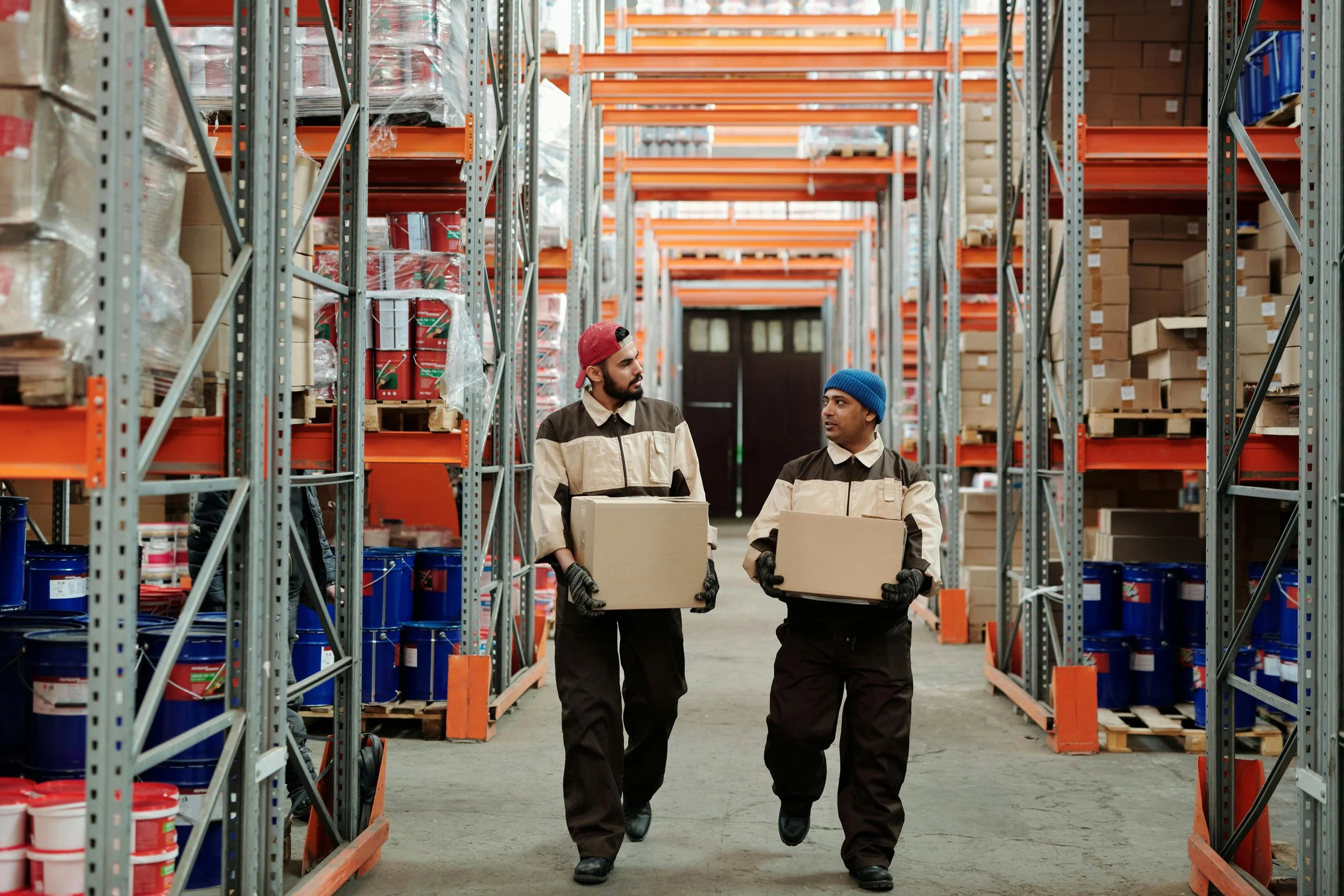
A warehouse is a large facility designed primarily to store inventory in bulk. Products come in, get organized on shelving or pallets, and sit there until they’re needed, whether that’s for seasonal restocking, wholesale distribution, or manufacturing supply.
Walk into a traditional warehouse and you’ll find high racks, forklifts moving pallets, and a relatively quiet day-to-day operation. The primary activity is receiving and storing. Outbound shipments tend to be large freight movement (full pallets or truckloads going to retailers or distribution centers), not individual packages headed to customers’ doorsteps.
Warehouses make sense for manufacturers holding raw materials, wholesalers managing large volumes of a single product, or retailers storing seasonal inventory between peak periods. What they are not built for is the high-velocity order fulfillment that many brands rely on to compete with the speed and customer experience of large brands.
What is a Fulfillment Center?
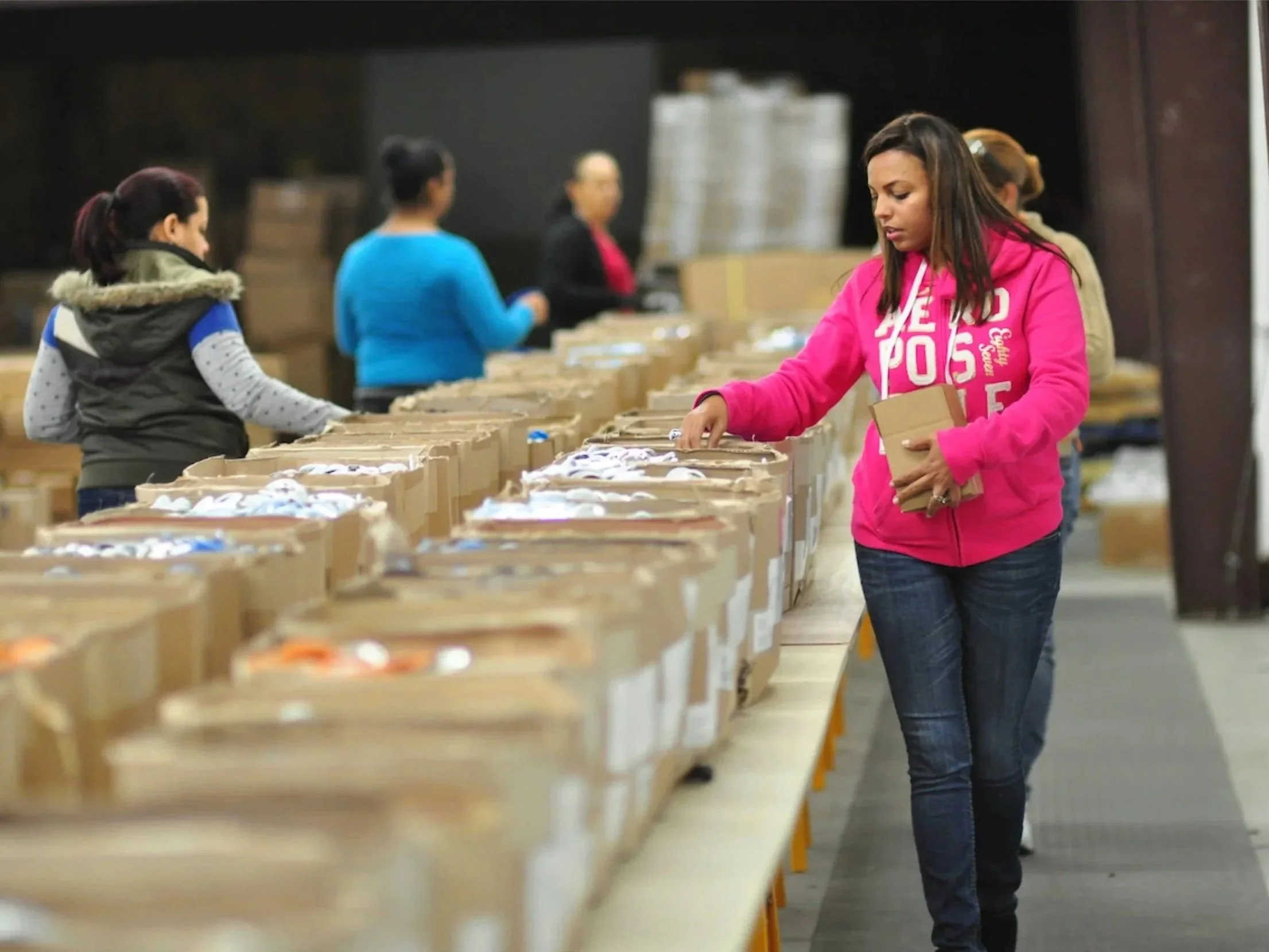
A fulfillment center is a facility, typically operated by a third-party logistics provider (3PL), built specifically to handle B2B and eCommerce fulfillment at scale. A 3PL fulfillment center receives your inventory, processes customer orders, and ships products directly to end customers. The emphasis is on movement, not storage.
Here’s what a typical order lifecycle looks like inside a fulfillment center:
Receiving: your inventory arrives, gets checked in, inspected, and slotted within 24 to 48 hours
Storage: products are organized by SKU in a dedicated area of the warehouse
Order Processing: when a customer places an order, it’s automatically downloaded into the system
Pick and Pack: a team member picks the correct items and packs them to your brand’s specifications
Carrier Selection: the system rate-shops across carriers to find the most cost-effective, timely option
Shipment: a shipment label is printed and applied to the package and the carrier picks up the order
Tracking: your customer gets real-time updates from the moment the label prints
Returns: reverse logistics handled end-to-end, from return labels to restocking
Unlike a warehouse, a fulfillment center is also a technology platform. A good 3PL integrates with your Shopify store, EDI trading partners, and other sales channels so orders flow in automatically and inventory levels update in real time.
It’s important to keep in mind that inventory in a fulfillment center should ideally turn over within 30 days. Products that sit longer may start accumulating higher storage fees. A fulfillment center is not designed for inventory to hibernate. It’s designed to move it.
Fulfillment Center vs. Warehouse: Side-by-Side
| Warehouse | Fulfillment Center | |
|---|---|---|
| Primary purpose | Long-term, bulk storage | Order processing and shipping |
| Customer orders | No | Yes, D2C and B2B |
| Inventory turnover | Slow | Fast (ideally under 30 days) |
| Services included | Storage only | Pick, pack, ship, returns, kitting |
| eCommerce integrations | Rarely | Standard (Shopify, EDI, and more) |
| Who it's for | Wholesalers, manufacturers | D2C brands, eCommerce sellers, complex wholesalers |
| Pricing model | Monthly storage fees | Per-order + storage |
| Carrier relationships | Typically FTL or LTL | LTL and daily UPS, FedEx, USPS pickups |
Fulfillment Center vs. Distribution Center: What's the Difference?
Understanding the fulfillment center vs. distribution center distinction matters just as much as the warehouse comparison, especially for brands starting to sell through retail.
A distribution center is a facility that sits between a manufacturer and a retailer. Products arrive in bulk from a supplier, get sorted and cross-docked, and go out to retail store locations or regional warehouses. Think of the large facility where a national retailer receives truckloads from hundreds of vendors and redistributes them to individual stores.
Distribution centers are built for B2B wholesale movement, not for shipping individual packages to consumers. They deal in pallets and freight, not poly-mailers and bubble wrap.
What many brands don't realize is that a fulfillment center often serves as the critical link between the manufacturer and the distribution center. Large retailers have strict packing, labeling, and shipping requirements that manufacturers aren't equipped to handle. Rather than shipping directly from the factory to the DC, inventory makes a stop at the 3PL first — where it's sorted, packed to the retailer's specifications, and labeled correctly before it ever reaches the distribution center.
For brands selling through both D2C and retail channels simultaneously, this is where omnichannel fulfillment comes in. An experienced 3PL like Coast to Coast Fulfillment can handle B2B retail distribution, including DSD, Pre-Distro, and Distro models, alongside your D2C eCommerce orders out of the same facility. That's a level of operational flexibility that neither a standalone warehouse nor a distribution center can offer on its own.
Why the Location of Your Fulfillment Center Matters

Here’s the piece that almost every fulfillment center vs warehouse article skips entirely. Not all fulfillment centers are equal, and where yours sits on the map has a direct impact on your shipping costs and customer satisfaction.
Carrier pricing is based on shipping zones: geographic bands that expand outward from your fulfillment center’s location. The further a package travels, the higher the zone number and the higher the cost. Every zone jump adds cost and transit time.
Think of it like expanding rings on a map. The closer your fulfillment center is to your customers, the more orders land in low-cost, fast-delivery zones.
Approximately 70% of the U.S. population lives east of the Mississippi River. That one fact changes the math entirely for brands shipping nationwide. Coast to Coast Fulfillment is based in Rhode Island, positioned at the heart of the Northeast Corridor and within reach of more than 60 million people. Here’s what ground shipping looks like from that location:
Zones 1 to 2 (1 to 2 days): New York City, Boston, Philadelphia, Hartford
Zones 3 to 4 (2 to 3 days): Chicago, Atlanta, Miami, Washington D.C.
Zones 5 to 6 (3 to 4 days): Dallas, Denver, much of the Southeast and Midwest
Zones 7 to 8 (4 to 5 days): West Coast
Compare that to shipping from California, where those same 210+ million Americans on the East Coast and Midwest fall into expensive Zones 5 to 8 on every single order. For many brands, an East Coast fulfillment center can reduce postage costs by 15 to 25% compared to West Coast warehousing, without changing a single carrier or shipping speed.
Location isn’t just a logistics detail. For most D2C brands, it’s a competitive advantage hiding inside the line items of your monthly fulfillment invoice.
Want to go deeper on this? Check out our East Coast vs. West Coast Warehousing guide.
Which One Does Your Brand Actually Need?
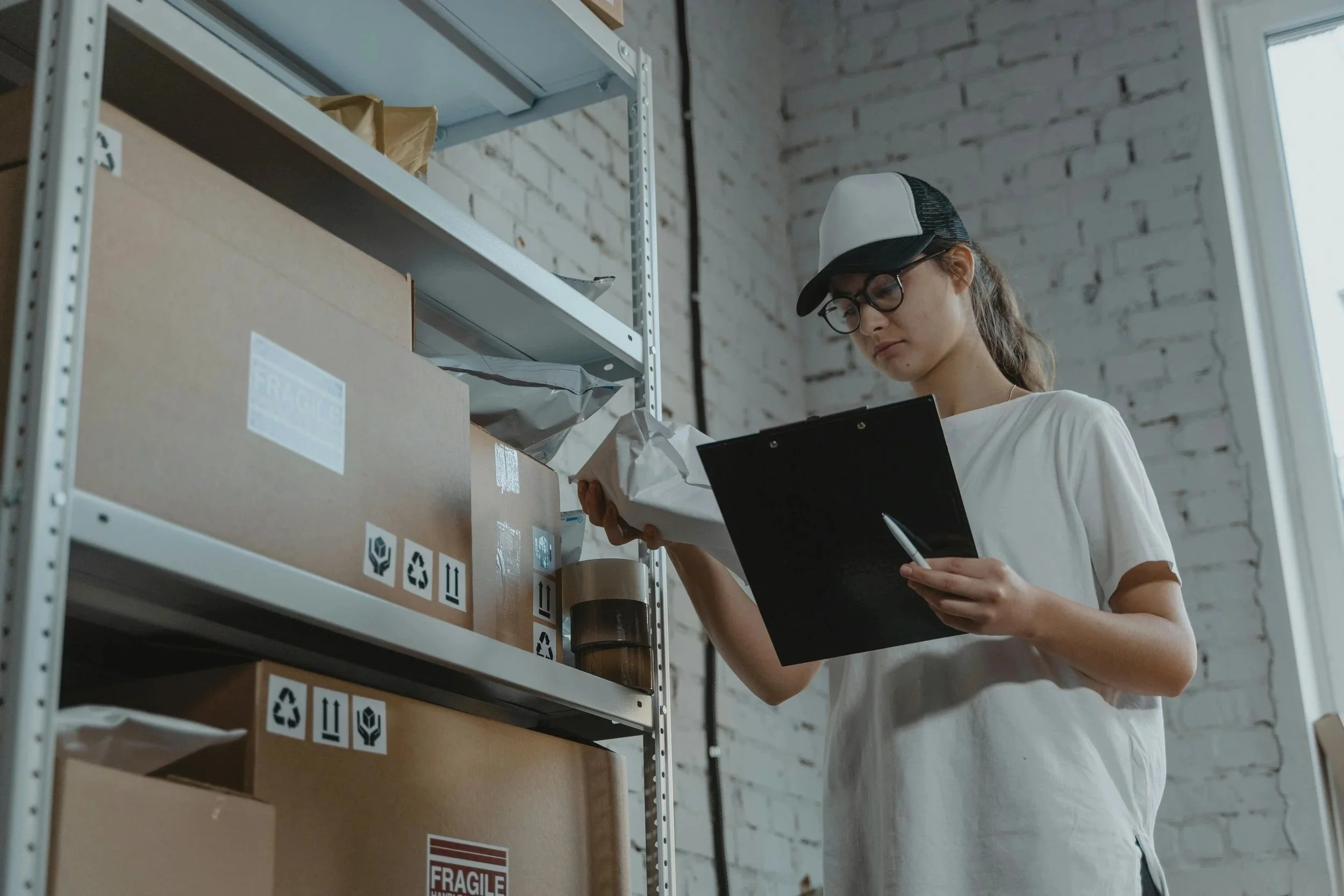
The short answer: if you ship orders to customers or retailers, you need a fulfillment center. But let's get more specific.
Choose a Fulfillment Center If:
You ship orders directly to consumers (D2C)
You sell on Shopify, Amazon, TikTok Shop, or similar platforms
You're a wholesale brand with higher SKU counts selling to retailers that require packing to the store level
You need same-day or next-day order processing
You need kitting, subscription box assembly, or custom packaging
You want real-time inventory visibility across channels
You process returns on a regular basis
You're expanding into retail and need EDI compliance support for trading partners like Walmart, Target, or Nordstrom
Fast, reliable delivery is central to your customer experience — whether that customer is a shopper or a store
Stick With a Warehouse If:
You store bulk seasonal or overflow inventory with few daily orders
You ship large freight quantities to retailers or distributors, not to individual consumers
You manage your own in-house picking and packing operation
Choose an Omnichannel Fulfillment Center If:
You sell both D2C and through retail channels at the same time
You need one partner to handle eCommerce orders, wholesale distribution, and returns management under one roof
The Bottom Line
Warehouses store. Fulfillment centers move. For eCommerce brands, the question isn’t really whether you need a fulfillment center. It’s which one is the right fit for your products, your channels, and your customers.
And once you’ve made that choice, remember: the address on the building isn’t just a logistics detail. It’s one of the most leverageable decisions in your supply chain.
Request a consultation with Coast to Coast Fulfillment today to find out how a Rhode Island-based east coast fulfillment center can help your brand ship faster, spend less, and scale with confidence.
Fulfillment Center vs. Warehouse FAQ
-
A warehouse is primarily built for long-term bulk storage with minimal daily order activity. A fulfillment center is designed to receive, process, and ship individual customer orders quickly, typically within 24 hours. Fulfillment centers also include services like pick and pack, returns management, carrier rate shopping, and integrations with eCommerce platforms, none of which are standard in a traditional warehouse.
-
A wholesaler should consider using a fulfillment center when they begin selling directly to consumers, expand into eCommerce, or need to process a high volume of individual orders. Unlike traditional warehouses that are optimized for bulk pallet shipments to retailers, fulfillment centers are designed to pick, pack, and ship individual customer orders quickly while managing returns, inventory synchronization, and carrier selection. Outsourcing fulfillment can also help wholesalers scale operations without investing in additional warehouse space, labor, or fulfillment technology.
-
Not exactly, but they’re closely related. When comparing a 3PL vs warehouse, the key distinction is services: a warehouse stores your inventory, while a 3PL fulfillment center stores it and ships it. A 3PL (third-party logistics provider) is a company that manages logistics on your behalf. Most 3PLs operate out of fulfillment centers, so when you partner with a 3PL, you’re getting access to a fulfillment center and all its services.
-
A distribution center receives bulk inventory and moves it onward in large quantities (cases or pallets) to retailers, stores, or regional warehouses. A fulfillment center processes individual orders and ships them directly to customers, but can also prepare retail-ready shipments to send into a distribution center or store. Some 3PLs, including Coast to Coast Fulfillment, handle both from a single facility for brands with omnichannel needs.
-
A brand should consider a fulfillment center instead of a warehouse when its operational requirements exceed what basic storage can provide. The decision depends on services required, SKU complexity, and how products are sold, not just order volume alone. A brand shipping a single SKU on pallets to retailers may be well served by a warehouse regardless of volume. A D2C brand with 50 monthly orders that requires returns processing, custom packaging, or real-time inventory visibility will need a fulfillment center regardless of volume.
-
Significantly. Carrier pricing is zone-based, meaning the further a package ships from your fulfillment center, the more it costs. An East Coast fulfillment center reaches 70%+ of U.S. consumers in lower-cost shipping zones compared to a West Coast location. For brands shipping nationwide, this can translate to 15 to 25% lower average shipping costs per order.
-
Yes, if the 3PL is set up for omnichannel fulfillment, like Coast to Coast Fulfillment, it can process both D2C eCommerce orders and retail wholesale shipments, including EDI compliance for major retailers. For growing brands expanding into retail, this eliminates the need for a separate logistics partner.