

What is EDI Order Processing? – EDI Flow Diagram Explained

Last Updated: February 17 | ⏱ 7 min
If you've ever partnered with a major retailer like Walmart, Target, or Amazon, you've probably encountered the term "EDI compliance." Maybe you've been asked to submit EDI 850s, send ASNs, or ensure your invoices arrive in the right format. For many brands, EDI feels like a mysterious requirement—a technical hurdle standing between you and retail partnerships.
But here's the reality: understanding EDI order processing isn't just about compliance. It's about unlocking faster fulfillment, reducing errors, and scaling your business efficiently. Electronic Data Interchange (EDI) is the backbone of modern supply chain communication, and once you understand how it works, it transforms from an obstacle into a competitive advantage.
This guide breaks down EDI order processing in simple terms, walks you through the common EDI documents you'll encounter, and explains the entire EDI process flow from purchase order to delivery. Whether you're new to EDI or looking to optimize your existing workflows, you'll leave with a clear understanding of how EDI works and why it matters.
What is EDI? (Electronic Data Exchange)
Electronic Data Interchange (EDI) is a standardized, computer-to-computer method for exchanging business documents between trading partners. Instead of sending purchase orders, invoices, and shipping notices via email, fax, or paper, EDI transmits these documents electronically in a standard, machine-readable format.
Think of EDI as a universal language for business transactions. When your systems and your trading partner's systems both speak EDI, information flows seamlessly without manual data entry, email chains, or risk of miscommunication. A purchase order sent from Walmart's system automatically populates in your fulfillment system, ready to be processed—no copy-pasting, no transcription errors, no delays.
EDI replaces paper-based processes with automated digital workflows, enabling faster communication, near-perfect accuracy, and the ability to handle thousands of transactions simultaneously. For businesses working with major retailers, distributors, or logistics partners, EDI isn't optional—it's the standard.
What is EDI Order Processing?
EDI order processing is the use of EDI to automate the exchange of purchase orders and related documents throughout the order fulfillment cycle. Instead of manually entering order details from an email or spreadsheet, EDI allows a buyer's system to send a purchase order directly to a supplier's system in a standardized format. The supplier's system receives the order, processes it automatically, and responds with shipping updates and invoices—all with minimal human intervention.
Here's what EDI order processing looks like in practice:
1. A retailer like Target sends you an EDI 850 (Purchase Order) electronically
2. Your fulfillment system receives the order and automatically begins processing
3. You send back an EDI 870 (Order Status Report) confirming inventory availability
4. Your warehouse picks, packs, and ships the order according to the retailer's specifications
5. You transmit an EDI 856 (Advance Ship Notice) before the shipment arrives
6. You send an EDI 810 (Invoice) for payment processing
This entire cycle happens with minimal manual intervention, reducing errors and dramatically speeding up the order-to-delivery timeline.
For brands selling through retail partnerships, EDI order processing is essential for maintaining compliance, avoiding chargebacks, and ensuring smooth operations at scale.

Our relationship with CTCF has only grown over time. In addition to handling our logistics, they now manage our returns processing and twice-yearly sample sales (where shipping volumes spike). We are incredibly grateful for their partnership - it's tough to find a smart, thoughtful partner who cares about quality as much as we do!
- Trisha Okubo, Founder of Maison Miru
Beyond customer satisfaction, reverse logistics influences profitability in tangible ways. Returned items that are quickly inspected, repackaged, and restocked can be resold at full price. Products that sit in limbo or get mishandled become markdowns or total losses. The difference between an optimized reverse logistics process and a chaotic one often determines whether returns are a manageable cost of doing business or a profit killer.
Types of EDI Documents
EDI documents are the building blocks of electronic communication between trading partners. Each document type serves a specific purpose in the order lifecycle.
Here are the most common EDI documents you'll encounter:
EDI 850 – Purchase Order (PO): A buyer's official request to purchase goods or services from a supplier, including buyer and seller information, item SKUs, quantities, pricing, requested ship dates, and ship-to/bill-to addresses. This is the starting point of most EDI transactions, triggering fulfillment, inventory allocation, and shipping.
EDI 855 – Purchase Order Acknowledgment: Confirms receipt and acceptance (or rejection) of an EDI 850, often sent immediately after receiving the purchase order.
EDI 860 – Purchase Order Change Request: A document used to modify an existing EDI 850 after it's been sent, including quantity updates, cancellations, price adjustments, or ship date changes. Prevents errors when buyers need to adjust orders based on demand fluctuations or inventory needs.
EDI 870 – Order Status Report: A seller's response communicating the current status of an order (accepted, backordered, delayed, or shipped). Provides visibility and sets expectations, especially when inventory levels change or fulfillment timelines shift, keeping buyers informed without requiring phone calls or email follow-ups.
EDI 940 – Warehouse Shipping Order: Used by brands to instruct a 3PL to ship goods. This is equivalent to a fulfillment order.
EDI 945 – Warehouse Shipping Advice: Sent by the warehouse to confirm what was actually shipped, often feeding back into the ASN or billing workflow.
EDI 856 – Advance Ship Notice (ASN): A notification sent before a shipment arrives, detailing carrier and tracking information, carton and pallet structure, item-level contents, and quantities shipped. Critical for warehouse receiving, cross-docking, and compliance—major retailers like Amazon, Walmart, and Target require accurate ASNs to prepare their distribution centers for incoming shipments. Missing or incorrect ASNs can result in costly chargebacks.
EDI 810 – Invoice: The seller's billing document sent after goods are shipped, including invoice number, item pricing, freight charges, taxes, and discounts. Drives accounts payable automation and enables three-way matching (Purchase Order → Advance Ship Notice → Invoice). Accurate invoices ensure timely payment and reduce disputes.
Other Common EDI Documents:
EDI 846 – Inventory Inquiry/Advice: Shares current inventory levels between trading partners, commonly used in dropshipping and vendor-managed inventory (VMI) arrangements.
EDI 943 – Warehouse Stock Transfer Shipment Advice: Notifies receipt of inbound inventory to a warehouse.
EDI 944 – Warehouse Stock Transfer Receipt Advice: Confirms what was received versus what was expected during inbound receiving.
EDI 820 – Payment Order/Remittance Advice: Tells the seller how and when they're being paid, including invoice references and deductions.
EDI 997 – Functional Acknowledgment: A technical receipt confirming an EDI file was successfully received and is readable. This does not mean the order was accepted—only that the file passed validation.
EDI 864 – Text Message: Used to transmit free-form, non-structured information such as operational notes, clarifications, or one-off messages that don’t fit into a standard EDI document.
EDI 753 – Request for Routing Instructions: Sent by a shipper to ask a carrier or logistics partner how a shipment should be routed, including carrier selection, service level, or shipping instructions.
EDI 754 – Routing Instructions: The response to an EDI 753, providing approved routing details such as carrier, mode, service level, and any special shipping requirements.
How EDI Order Processing Works - The EDI Flowchart
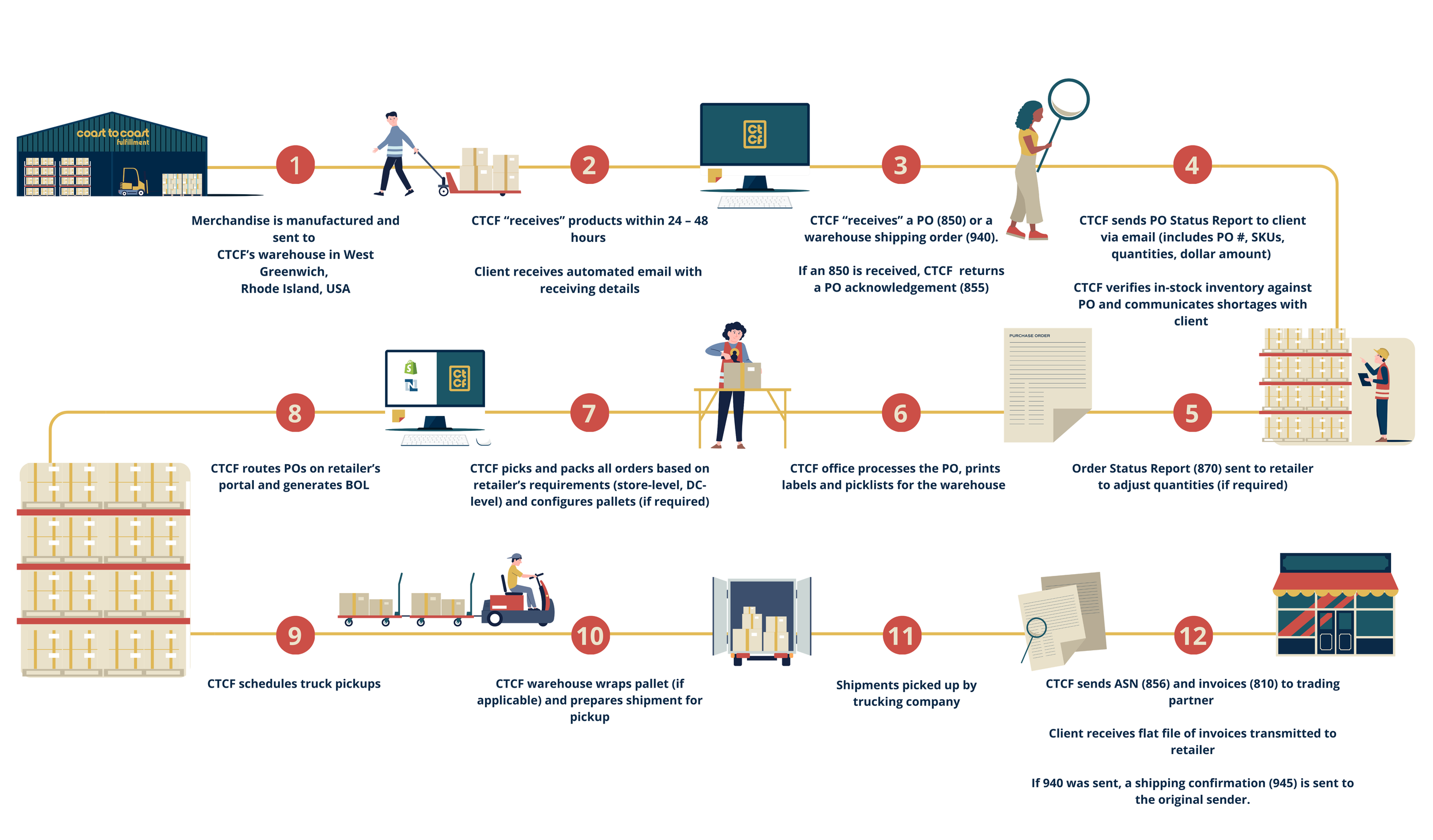
Understanding the EDI process flow helps demystify how orders move from a retailer's system through fulfillment and delivery. Here's a step-by-step breakdown of a typical EDI order processing cycle at Coast to Coast Fulfillment:
-
Merchandise is manufactured and shipped to the CTCF warehouse. Upon arrival, CTCF receives products within 24-48 hours and sends the client an automated email with receiving details, including quantities received, condition notes, and inventory location assignments.
-
The retailer's system generates and transmits an EDI 850 (Purchase Order) to CTCF. This document contains all order details: SKUs, quantities, pricing, ship-to addresses, and requested delivery dates.
-
CTCF sends a PO status report to the client via email, including the PO number, SKUs, quantities, and dollar amount. This ensures the client has visibility into incoming orders and can flag any discrepancies immediately.
-
CTCF verifies in-stock inventory against the PO requirements. If any items are out of stock or quantities need adjustment, CTCF communicates shortages to the client and sends an EDI 870 (Order Status Report) to the retailer to adjust quantities or notify of backorders.
-
-
CTCF warehouse staff picks and packs all orders based on the retailer's requirements. This includes store-level shipments, distribution center (DC) shipments, and pallet configurations that meet compliance standards. Each carton is labeled according to retailer specifications to avoid chargebacks.
-
CTCF routes purchase orders through the retailer's portal and generates a Bill of Lading (BOL) for the shipment. This document serves as proof of shipment and outlines what's being transported.
-
CTCF schedules truck pickups with carriers, wraps pallets (if applicable), and prepares shipments for pickup. All documentation is verified to ensure compliance with carrier and retailer requirements.
-
The trucking company picks up the shipment from the CTCF warehouse and begins transit to the retailer's distribution center or store locations.
-
CTCF sends an EDI 856 (Advance Ship Notice) and EDI 810 (Invoice) to the trading partner. The ASN provides detailed shipment information before arrival, allowing the retailer to prepare for receiving. The invoice initiates payment processing.
-
The client receives a flat file of invoices transmitted to retailers, ensuring they have records of all billing activity for reconciliation and accounting purposes.
Benefits of EDI Order Processing
EDI order processing delivers tangible benefits that make it indispensable for modern supply chains:
Speed and Efficiency
EDI eliminates manual data entry, reducing order processing time from hours or days to minutes. Orders flow automatically from retailer systems to fulfillment systems, accelerating the entire cycle from purchase to delivery.
Accuracy and Error Reduction
Manual data entry introduces errors—typos, transposed numbers, missed line items. EDI removes human error from the equation, ensuring purchase orders, invoices, and shipping notices are transmitted accurately every time.
Cost Savings
By automating document exchange, EDI reduces labor costs associated with manual processing, data entry, and error correction. It also minimizes costly chargebacks from retailers due to compliance failures or shipping mistakes.
Improved Supply Chain Visibility
EDI provides real-time visibility into order status, inventory levels, and shipment tracking. Trading partners can monitor the entire order lifecycle without phone calls, emails, or manual status updates.
Improved Partner Relationships
Reliable, accurate, and timely communication strengthens relationships with retailers and distributors. Meeting EDI compliance requirements demonstrates professionalism and operational maturity, making you a preferred supplier.
Scalability
As your business grows, EDI scales effortlessly. Whether you're processing 100 orders per month or 10,000, EDI handles the volume without requiring proportional increases in staff or manual effort.
3PL's Specialized for EDI Order Processing
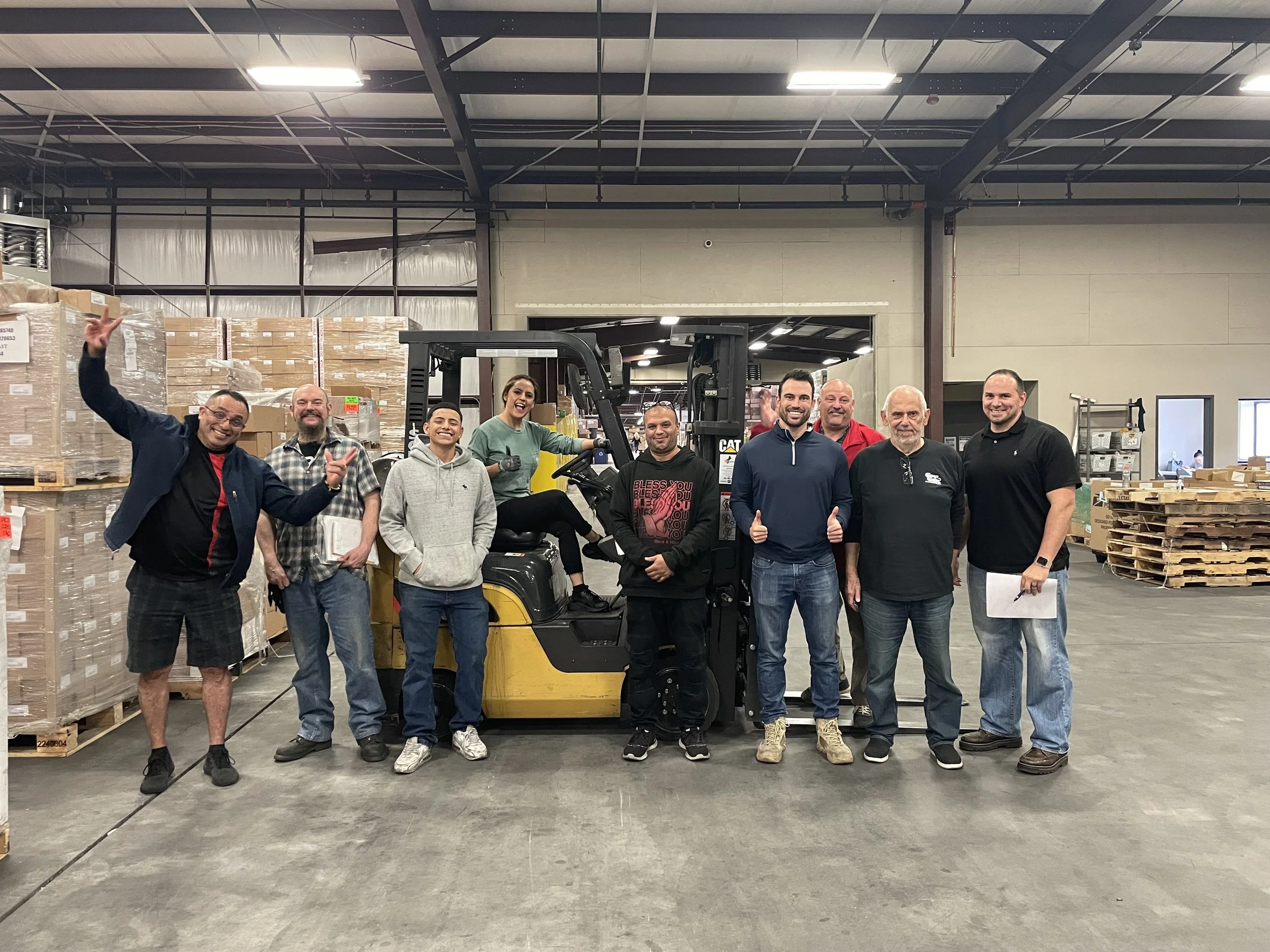
At Coast to Coast Fulfillment, we specialize in EDI order processing for brands selling through major retailers. Our team handles the technical complexity of EDI compliance so you can focus on growing your business.
Coast to Coast Fulfillment is a U.S.-based 3PL offering eCommerce and B2B fulfillment for industries like apparel, cosmetics, jewelry, and more. We partner with brands to ensure seamless communication with retailers like Walmart, Target, and Amazon, etc.
Our EDI capabilities include:
Compliance management ensuring vendor standards and routing guidelines are met for all trading partners
Full EDI document support including PO receipt, invoicing, ASN, and more
Error handling and real time monitoring of EDI transactions for error checking and corrections
Custom mapping for accounting softwares and ERP systems, allowing easy import of EDI orders
Custom reporting for any data needed from EDI transactions
Compliance management ensuring vendor standards and routing guidelines are met for all trading partners
Custom integration with non-EDI partners for easier automation of “paper” POs
When you partner with CTCF, EDI compliance becomes our responsibility, not your headache. We've processed millions of EDI transactions, navigated complex retailer requirements, and built systems that ensure accuracy and speed at scale.
Ready to simplify your EDI order processing and scale your retail partnerships? Contact Coast to Coast Fulfillment today to learn how our EDI expertise can help you meet retailer requirements, avoid chargebacks, and grow with confidence.